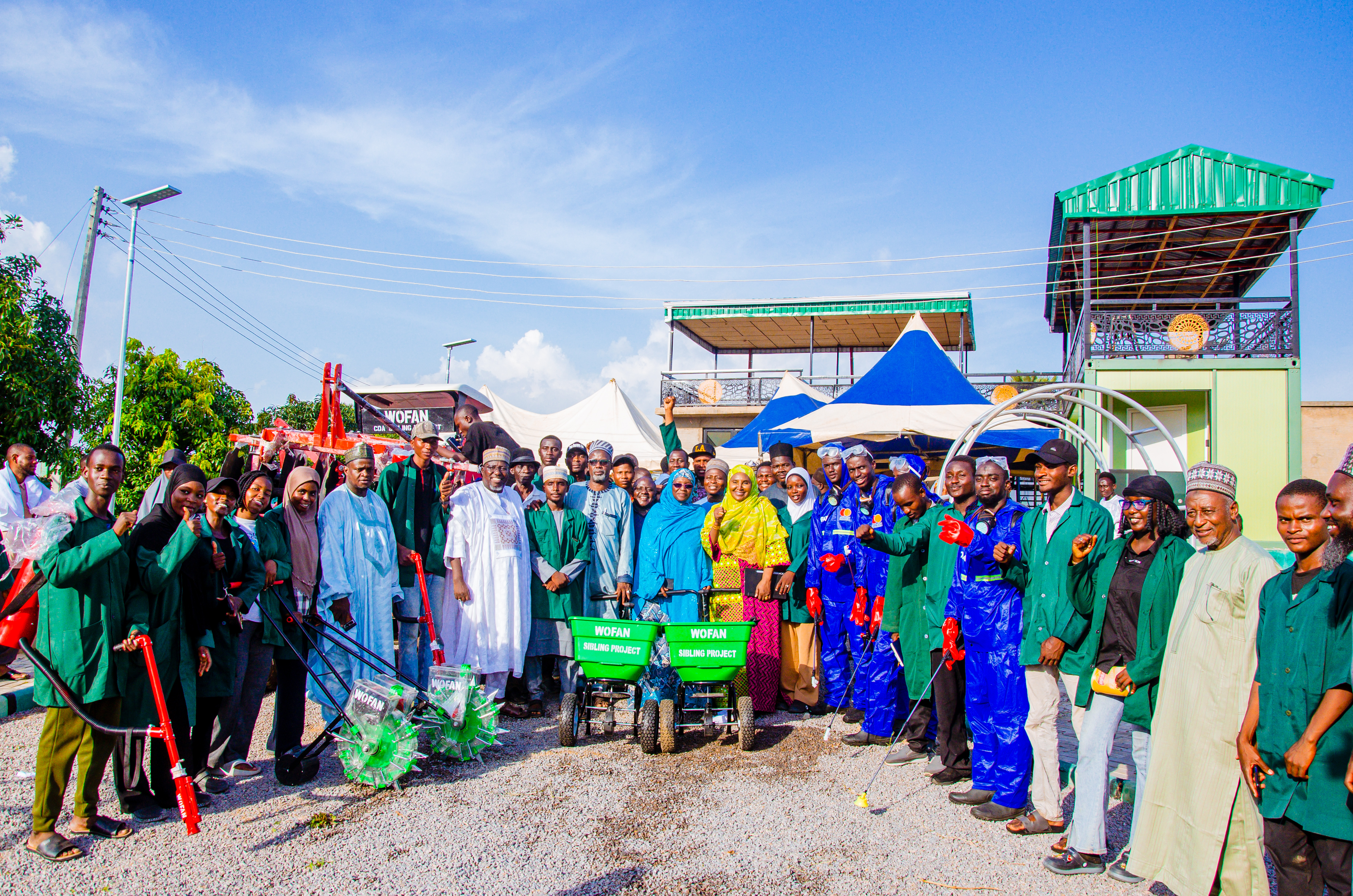
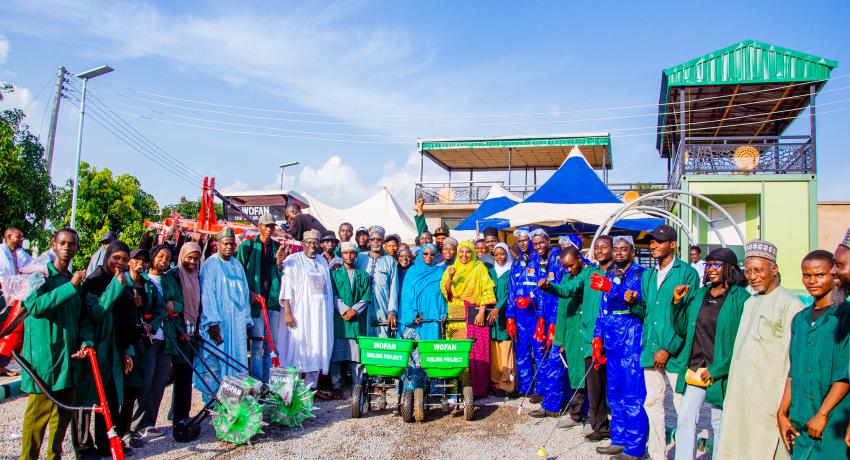
At a time when Nigeria is searching for practical solutions to youth unemployment, food insecurity and the widening gap between classroom learning and industry realities, the Skills Improvement to Boost Livelihood and Nurture Growth (SIBLING) Project at Bayero University, Kano (BUK), has emerged as a compelling example of what can be achieved when academia and the private sector work together with a shared vision.
The initiative, spearheaded by the Women Farmers Advancement Network (WOFAN) in partnership with Bayero University through the Centre for Dryland Agriculture (CDA) and the Faculty of Agriculture, is redefining agricultural education by moving beyond theory to practical and from farm gates to the corridors of industries thereby transforming agricultural theories upscaling from classroom leanings to hands-on simple, modern technologies that promotes enterprise development. Rather than limiting students to conventional classroom instructions.
Rhe project immerses them in modern farming techniques, agribusiness management, value addition and entrepreneurship, equipping them with skills that can translate directly into sustainable livelihoods, labour employers and dignified agribusiness owners after graduation.
The significance of the SIBLING Project extends far beyond the boundaries of Bayero University. It presents a practical roadmap for addressing some of Nigeria's most pressing challenges: graduate unemployment, low agricultural productivity, poor agricultural extension services and inadequate exposure of students to real-world enterprise. This approach will further make agribusiness a pathway to attracting our Youths especially to get attracted to farming and seeing it beyond tilling the soil with hies and cutlasses. Moreso, this will attract Financial institutions into supporting more of agribusiness since the come will be more profitable with a high turnover rate at this time when agriculture remains one of the Nigeria’s greatest economic opportunities. According to Dr Salamatu, “universities must become centres of innovation, production and entrepreneurship rather than institutions that merely award certificates”.
One of the defining strengths of the initiative is the depth of commitment demonstrated by its partners. Through the collaboration, WOFAN has invested substantially in agricultural inputs, mechanisation, infrastructure and technical support, while Bayero University has provided land, technical expertise, institutional backing and academic integration, a model that brings together research institutions, private and public sectors that eventually will attract the Finantial institutions to rally round the initiative. The result is a partnership where both institutions contribute mutually and complementary strengths, share risks and profits towards a common objective—developing graduates who are capable of creating jobs rather than merely seeking them.Such exposure builds confidence, enhances employability and encourages graduates to view agriculture as a profitable business venture instead of a last resort.
It is therefore unsurprising that the project has attracted widespread recognition from government officials, educational stakeholders and professional bodies. The visit by the Honourable Minister of Education, Dr. Tunji Alausa, alongside the Honourable Minister of State for Education, Professor Suwaiba Said Ahmad, underscored the Federal Government's appreciation of the project's enormous potential. Their commendation reflected growing national recognition that innovative partnerships such as SIBLING can significantly strengthen Nigeria's higher education system and agricultural value chain.
Similarly, the Bayero University Alumni Association deserves recognition for publicly applauding the initiative. The Association's endorsement reflects the confidence of graduates who appreciate the value of practical education and understand the importance of preparing today's students for tomorrow's economic realities. Alumni support further reinforces the credibility and sustainability of such transformative programmes.
The success of the SIBLING Project offers an important lesson for universities across Nigeria. Higher education institutions should actively pursue strategic partnerships with credible private sector organisations, development agencies and agricultural enterprises to bridge the persistent gap between academic learning and practical application. While government funding remains indispensable, sustainable development increasingly depends on collaborative models that combine public institutions' intellectual resources with private sector innovation, investment and implementation capacity.
Every federal, state and private university with programmes in agriculture, environmental sciences or related disciplines should study the SIBLING model with a view to adapting it to their local contexts. Such partnerships have the potential to transform university farms into thriving centres of research, commercial production, innovation and entrepreneurship while producing graduates who possess marketable skills and practical experience.
The National Universities Commission (NUC), relevant ministries and university governing councils should also encourage policies that reward institutions capable of establishing productive partnerships with industry. Academic excellence today must not be measured solely by publications and graduation statistics but also by the capacity of universities to solve societal problems, stimulate economic growth and empower graduates with practical skills.
As Nigeria continues to seek lasting solutions to food insecurity and youth unemployment, there is another urgent policy issue that deserves immediate legislative attention. The National Assembly should expedite action on the Agricultural Extension Bill. A modern and comprehensive legal framework for agricultural extension services would strengthen collaboration among universities, research institutions, extension professionals, farmers and private sector organisations.
Passage of the bill would provide a stronger institutional foundation for initiatives such as the SIBLING Project by promoting knowledge transfer, improving access to agricultural innovations, encouraging technology adoption and creating structured mechanisms for scaling successful models across the country. It would also reinforce the role of universities as active contributors to national agricultural development rather than passive centres of instruction.
Agricultural extension remains the bridge between research findings and practical application. Without an effective extension system supported by law and adequate funding, many groundbreaking innovations developed by universities and research institutions fail to reach farmers and rural communities where they are needed most. Strengthening this system would multiply the impact of initiatives like SIBLING and ensure that successful innovations are replicated nationwide.
Special commendation must go to the Founder, Chief Executive Officer and Global Advocate of WOFAN, Hajiya Dr. Salamatu Garba, whose vision, commitment and unwavering belief in the transformative power of agriculture continue to inspire meaningful change. Through WOFAN, she has consistently championed programmes that empower women, youths and vulnerable communities while promoting sustainable agricultural development across Nigeria and beyond.
The SIBLING Project stands as another testament to her commitment to investing in people rather than merely implementing projects. By creating opportunities for university students to acquire practical skills, entrepreneurial competence and business acumen, the initiative is nurturing a generation of graduates who are better prepared to become employers of labour, innovators and contributors to national food security.
Ultimately, the SIBLING Project is far more than an agricultural intervention. It is a model for educational reform, economic empowerment and sustainable development. It demonstrates that when universities, the private sector and development organisations work together with shared purpose, they can produce graduates equipped with the knowledge, skills and entrepreneurial mindset needed to thrive in a rapidly changing world.
As the nation looks ahead, policymakers, university administrators, legislators and development partners should see the SIBLING Project not as an isolated success story but as a blueprint for national transformation. Replicating this model across Nigeria's higher institutions would not only strengthen agricultural education but also accelerate youth empowerment, improve food production and contribute significantly to the country's long-term economic resilience